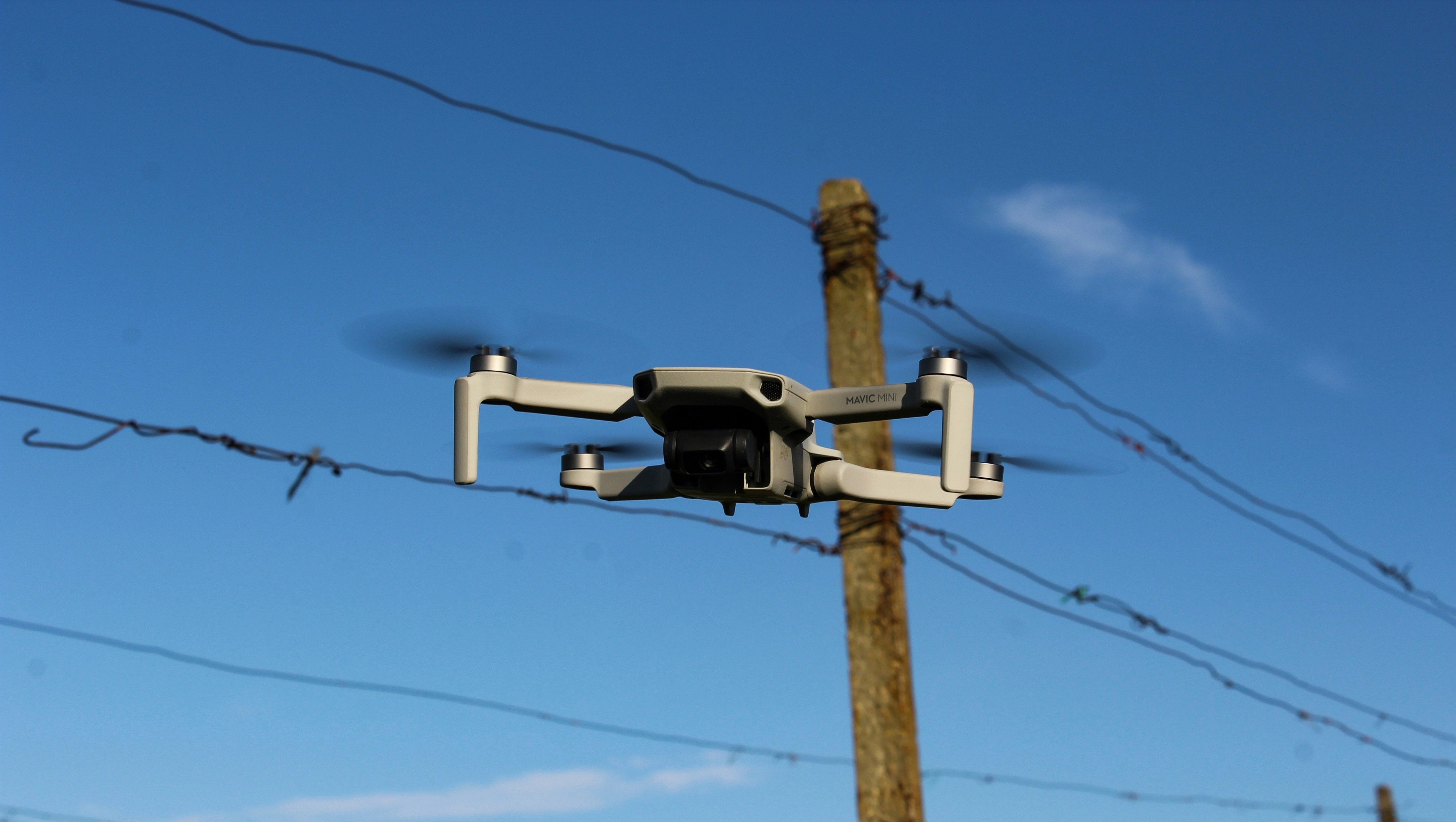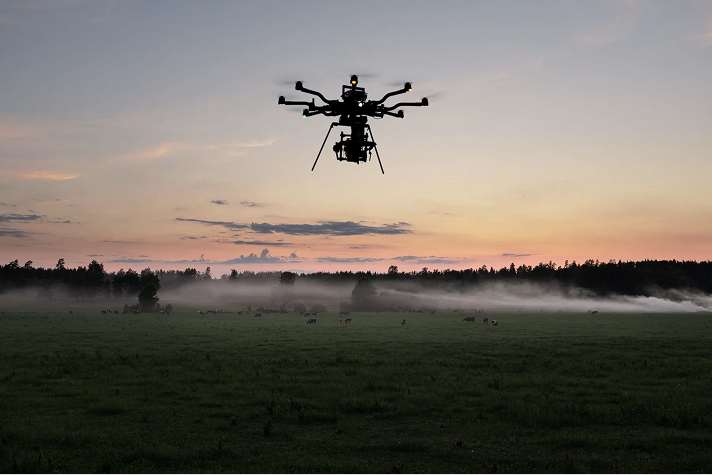
Modulai developed a synthetic data pipeline to help Synclair Vision train their drone-based camera system. By generating realistic aerial images and automated labels in a virtual environment, the solution replaced slow and costly real-world data collection with a faster, more flexible approach.
Challenge
Synclair Vision is developing an advanced drone-based camera system but faced difficulties collecting enough labeled data to train the underlying vision models. Drone flights are time-consuming and fail to cover all conditions the system may encounter. They needed a more efficient and cost-effective way to gather the large volumes of labeled aerial imagery required for model training.
Solution
Modulai developed a synthetic data pipeline using Unreal Engine that generates virtual scenes mimicking real-world environments. Given an outdoor scene, the system samples plausible camera positions and orientations based on a specified distribution. Objects of interest are dynamically placed within the camera's field of view with randomized orientations. The pipeline captures both RGB images and corresponding segmentation masks, which are then post-processed to extract bounding boxes around the objects.
Tools
The pipeline was built on Unreal Engine 5.4 for 3D environment creation and rendering, with UnrealCV providing Python interoperability and enabling automated capture of segmentation masks. Python was used for pipelining, projection computations, post-processing, camera setups, object placement, and labeling pipelines.
Value created
By automating data collection in a virtual environment, Synclair Vision greatly reduced reliance on costly, time-consuming drone flights. Thousands of labeled images can now be generated rapidly, covering a wide range of scenarios and object placements. Novel object classes can be added simply by importing new 3D assets.
Learn more